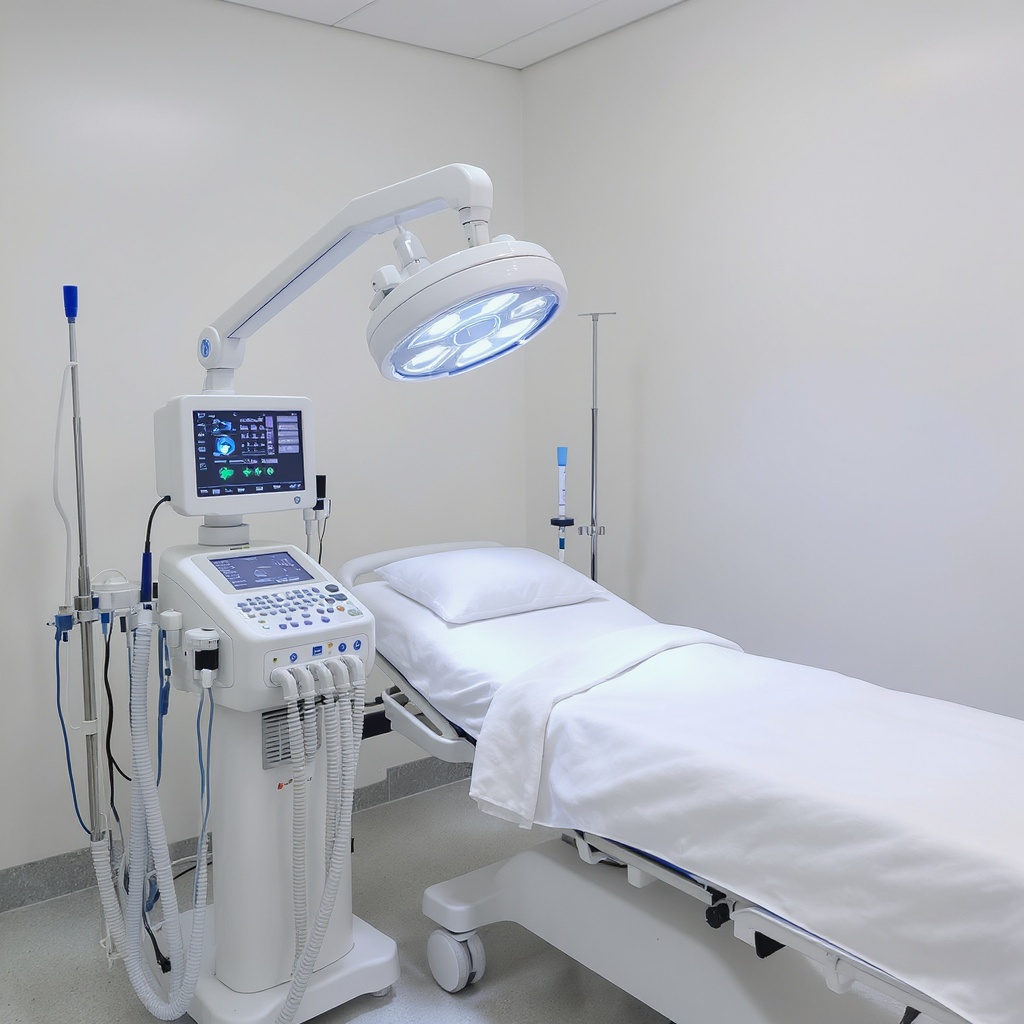
Key Takeaways
- HIFU (High-Intensity Focused Ultrasound) is a non-invasive treatment that destroys tumours without surgery, incisions, or radiation
- Clinical HIFU was invented at Chongqing Medical University in China — Discovery China's partner hospital city
- China has treated 100,000+ patients with HIFU, more than all other countries combined
- UK private HIFU costs £5,000-10,000. Chinese Grade 3A hospitals charge £1,500-3,000 for the same procedure
- HIFU has regulatory clearance from FDA (US), CE (Europe), and CFDA (China)
What Is HIFU? The Non-Invasive Treatment Most UK Patients Have Never Heard Of
HIFU stands for High-Intensity Focused Ultrasound. Think of it as using a magnifying glass to focus sunlight on a single point — except instead of sunlight, it uses ultrasound energy, and instead of burning paper, it precisely destroys targeted tissue deep inside the body without making a single incision.
The principle is elegant: hundreds of low-intensity ultrasound beams converge on a focal point inside the body. Individually, each beam passes harmlessly through skin and tissue. At the focal point, the combined energy generates temperatures of 60-100°C, destroying the targeted tissue through thermal ablation while leaving surrounding structures completely unharmed.
No scalpel. No radiation. No general anaesthesia in most cases. Patients typically walk out the same day or the next morning.
HIFU is used to treat a growing range of conditions:
- Uterine fibroids — the most common application, allowing women to avoid hysterectomy
- Prostate cancer — focal therapy that preserves continence and sexual function
- Liver tumours — both primary hepatocellular carcinoma and liver metastases
- Pancreatic cancer — palliative pain relief and tumour debulking
- Bone tumours — pain palliation for bone metastases
- Breast fibroadenomas — non-invasive removal without scarring
- Thyroid nodules — an emerging application avoiding surgical excision
For uterine fibroids specifically, HIFU represents a genuine alternative to myomectomy (surgical fibroid removal) and hysterectomy (uterus removal). For the estimated 1 in 3 women who develop fibroids by age 50, this matters enormously: a treatment that eliminates fibroids while preserving the uterus, with minimal recovery time, and no surgical scars.
The Invention Story: Why HIFU Is a Chinese Innovation
Clinical HIFU technology was not developed in America, Germany, or Japan. It was invented in Chongqing, China — the same city where Discovery China's partner hospitals are located.
In the early 1990s, Professor Wang Zhibiao and his research team at Chongqing Medical University began developing a system that could focus ultrasound energy with sufficient precision to ablate tumours non-invasively. By 1997, they had a working clinical prototype. In 1999, the first commercial HIFU device — the Haifu (海扶) Model JC — received regulatory approval from China's State Food and Drug Administration.
The name "Haifu" (海扶) is itself significant. It is a Chinese phonetic rendering of "HIFU" that also means "sea support" — a nod to the technology's broad therapeutic potential. The Haifu device became the foundation for what is now the world's most widely used clinical HIFU platform.
Since then, Chinese-developed HIFU systems have been exported to over 30 countries. The technology has received CE marking for the European market, FDA clearance in the United States (for specific indications), and is approved by regulatory bodies across Asia, South America, and Africa. Major academic medical centres worldwide — including institutions in the UK, Germany, and Japan — now use HIFU systems that originated in Chongqing.
This matters for UK patients considering HIFU treatment abroad for one critical reason: when you travel to China for HIFU, you are going to the source. Not a clinic that bought the technology second-hand, but the hospitals where the technique was invented, refined over three decades, and applied to more patients than anywhere else on Earth.
The Chongqing Connection
Discovery China's partner hospitals in Chongqing include institutions with direct links to the team that invented clinical HIFU. When we arrange HIFU treatment for UK patients, we are placing them in the hands of the world's most experienced HIFU practitioners — not replicating a procedure, but returning it to its birthplace.
HIFU in the UK: Limited Access, High Cost, Long Waits
HIFU treatment in the UK is available — but access is severely constrained.
The NHS offers HIFU for prostate cancer at a small number of specialist centres, primarily in London (UCLH and Imperial College Healthcare are among the most active). However, it is typically offered only as part of clinical trials or for very specific patient profiles. For uterine fibroids, NHS HIFU provision is even more limited — most trusts do not offer it at all, defaulting to myomectomy or hysterectomy.
In the private sector, UK clinics offering HIFU charge £5,000 to £10,000 depending on the condition, number of treatment sessions, and follow-up imaging. Private HIFU for uterine fibroids in London typically costs £6,000-8,000. Prostate HIFU ranges from £8,000-12,000 at top private urological centres.
Waiting times compound the problem. Even in the private sector, a HIFU consultation, pre-treatment MRI, treatment session, and follow-up scan can take 4-8 weeks from first contact to completion. On the NHS pathway, the timeline extends to months or longer.
| Factor | UK NHS | UK Private | China Grade 3A |
|---|---|---|---|
| HIFU for fibroids | Rarely available; most trusts offer surgery instead | £6,000–£8,000 | £1,500–£2,500 |
| HIFU for prostate | Limited centres; trial-based | £8,000–£12,000 | £2,000–£3,000 |
| Wait time | Months to years | 4–8 weeks | 1–2 weeks from booking |
| Practitioner experience | 100s of cases per centre | 100s of cases per centre | 10,000+ cases per major centre |
| Equipment generation | Varies by trust | Current generation | Latest generation (origin manufacturer) |
| Post-treatment stay | Day case or overnight | Day case | Day case; wellness recovery available |
The cost difference is not about quality — it is about economics. Chinese hospitals treat vastly higher volumes, the technology was developed domestically (eliminating import and licensing premiums), and the general cost of delivering healthcare in China is lower than in the UK. The same Haifu HIFU system used in a London private clinic was designed and manufactured in Chongqing. When you use it in Chongqing, you simply skip the import markup.
What Is a Grade 3A Hospital? China's Gold Standard Explained
UK patients researching treatment in China will encounter the term "Grade 3A hospital" (三甲医院) repeatedly. Understanding what it means removes most of the uncertainty about quality.
China's hospital classification system rates every hospital on two scales:
- Level (1–3): Based on size, services, and regional role. Level 3 hospitals are the largest, most comprehensive institutions — comparable to UK NHS teaching hospitals and major specialist centres
- Grade (C, B, A): Based on quality metrics. Grade A is the highest, requiring excellence across clinical outcomes, staffing, equipment, training, and governance
A Grade 3A hospital is therefore the top tier: a large, comprehensive, government-inspected institution that meets the highest quality standards. There are approximately 1,600 Grade 3A hospitals across China (out of roughly 35,000 hospitals total). They account for the majority of China's complex medical procedures and clinical research output.
For UK patients, the practical equivalence is clear:
- Equipment — same brands and often newer models than UK hospitals: Siemens, GE Healthcare, Philips for imaging; Roche, Abbott for diagnostics
- Staffing — senior physicians at Grade 3A hospitals have completed 5-year medical degrees, 3-year residencies, and often international fellowships. Competition for positions is intense
- Governance — regular inspections by the National Health Commission cover hundreds of quality metrics. Hospitals that fail lose their 3A rating
- International departments — most large Grade 3A hospitals have dedicated departments for foreign patients with bilingual staff and English-language reporting
- Research output — Grade 3A hospitals publish in international peer-reviewed journals and participate in global clinical trials
For a broader look at Chinese hospital standards, see our NHS Alternative Guide, which compares healthcare options for UK patients across multiple countries.
HIFU Clinical Applications: What Can It Treat?
Uterine Fibroids — The Most Common Application
Uterine fibroids affect an estimated 20-40% of women of reproductive age globally. In the UK, fibroids are the most common reason for hysterectomy — an operation that removes the uterus entirely. For women who want to preserve their fertility, or simply want to avoid major surgery, HIFU offers a compelling alternative.
HIFU treatment for fibroids involves focusing ultrasound energy through the abdominal wall onto the fibroid under real-time MRI or ultrasound guidance. The treatment typically takes 1-3 hours depending on the size and number of fibroids. Most patients experience significant symptom improvement within 3-6 months as the ablated fibroid tissue is gradually reabsorbed by the body.
China's experience with HIFU for fibroids is unmatched: over 60,000 women have been treated in Chinese hospitals, generating the world's largest body of long-term outcome data. Published studies from Chinese institutions show 70-90% symptom improvement rates, with low complication rates and excellent fertility preservation outcomes.
Prostate Cancer — Focal Therapy That Preserves Function
For men with localised prostate cancer, HIFU offers focal treatment that destroys the tumour while preserving surrounding tissue — critically, the nerves responsible for continence and erectile function. Compared to radical prostatectomy (surgical removal of the prostate), HIFU-treated patients show significantly lower rates of incontinence and impotence.
In the UK, HIFU for prostate cancer remains concentrated at a handful of specialist centres and is often considered only after other options have been discussed. In China, it is a mainstream treatment option at major urological centres, with thousands of cases completed annually.
Liver, Pancreatic, and Bone Tumours
HIFU's applications extend beyond gynaecology and urology. Chinese hospitals have pioneered its use for:
- Liver tumours — both primary liver cancer and metastatic disease, where HIFU can complement or replace radiofrequency ablation
- Pancreatic cancer — primarily for pain relief in advanced disease, where HIFU destroys tumour tissue that is pressing on nerve plexuses
- Bone metastases — pain palliation that can reduce or eliminate the need for opiate pain medication
These applications are at varying stages of adoption worldwide, but Chinese hospitals have the deepest clinical experience across all of them — a direct consequence of having developed and used the technology for three decades.
Safety, Certifications, and Regulatory Approval
HIFU technology has been evaluated and approved by major regulatory bodies worldwide:
- CFDA / NMPA (China) — approved since 1999; the longest regulatory track record of any country
- CE Marking (European Union) — approved for clinical use across all EU member states
- FDA (United States) — cleared for uterine fibroid treatment (2004) and prostate tissue ablation (2015)
- MHRA (UK) — CE-marked HIFU devices are accepted under UK medical device regulations
- KFDA (South Korea), TGA (Australia), ANVISA (Brazil) — approved in major regulated markets globally
Safety data from over 100,000 treatments shows a complication profile that compares favourably to surgical alternatives. Common side effects are mild: temporary skin reddening at the treatment site, minor discomfort during the procedure, and occasional low-grade fever in the 24-48 hours following treatment. Serious complications (skin burns, nerve injury) occur in less than 1% of cases at experienced centres.
The critical safety factor is practitioner experience. HIFU outcomes are highly operator-dependent — the skill of the treating physician in planning and executing the treatment directly affects both efficacy and complication rates. This is where China's volume advantage matters most: a HIFU specialist at a major Chongqing hospital may have personally performed 1,000+ procedures, compared to 50-100 at a typical UK centre.
Important: HIFU is a medical procedure with real risks and limitations. It is not suitable for all patients or all tumour types. Always discuss HIFU suitability with your UK consultant before travelling abroad. Discovery China facilitates a pre-treatment medical review to confirm eligibility before any booking is confirmed.
How Discovery China Supports HIFU Patients
Arranging HIFU treatment abroad is more complex than booking a health screening. It involves medical records review, pre-treatment imaging, hospital coordination, and post-treatment follow-up. Here is how Discovery China manages the process for UK patients:
- Initial consultation — Free consultation to understand your diagnosis, current treatment plan, and goals. We review your medical history to determine HIFU suitability
- Medical records review — Your existing scans (MRI, ultrasound) and clinical notes are sent to the treating hospital in Chongqing for specialist assessment. The hospital confirms whether HIFU is appropriate and provides a treatment plan
- Pre-treatment imaging — If needed, a fresh MRI is arranged on arrival in Chongqing to plan the exact HIFU treatment. This is typically done the day before treatment
- HIFU treatment — Procedure at a Grade 3A hospital with a bilingual coordinator present throughout. Most procedures take 1-3 hours; patients typically rest overnight and are discharged the following morning
- Recovery and wellness — Optional: join the Yangtze Wellness Cruise for recovery. Five days of gentle wellness activities — tai chi, TCM consultations, acupuncture — while the body heals
- Follow-up — Comprehensive English-language treatment report provided for your UK GP and specialist. Discovery China coordinates any recommended follow-up imaging at home
Total Cost: Treatment + Travel
Here is the realistic cost breakdown for a UK patient travelling to China for HIFU treatment:
| Item | Cost Range |
|---|---|
| HIFU treatment (fibroids) | £1,500–£2,500 |
| Pre-treatment MRI (if needed) | £80–£150 |
| Hospital stay (1-2 nights) | £50–£120 |
| Discovery China coordination fee | Included in programme |
| London–Chongqing flights (return) | £450–£700 |
| Optional: Wellness Cruise add-on | From £1,200 |
| Total (treatment only) | £2,100–£3,500 |
| Total (treatment + wellness cruise) | £3,300–£4,700 |
Compare this to £6,000-8,000 for HIFU at a UK private clinic — treatment only, no holiday, no wellness programme, and a practitioner who has likely performed a fraction of the cases your Chinese physician has completed.
UK passport holders can enter China visa-free for up to 240 hours (10 days) under the current transit visa exemption, which perfectly accommodates the treatment and recovery period. No visa application, no embassy visit, no fee.
For full programme pricing, see our pricing page.
Who Should Consider HIFU Treatment in China?
HIFU in China is worth considering if you match any of these profiles:
- Women with uterine fibroids who want to avoid hysterectomy, especially those seeking fertility preservation. The NHS often defaults to surgical options; HIFU offers a non-invasive alternative
- Men with localised prostate cancer who want focal treatment that preserves continence and sexual function, rather than radical surgery or whole-gland radiotherapy
- Patients with inoperable tumours (liver, pancreas) where HIFU may offer symptom relief that surgery cannot
- Anyone facing long NHS waiting times for fibroid treatment and who wants to resolve the problem within weeks rather than months
- UK private patients who have been quoted £5,000+ for HIFU and want the same treatment at a fraction of the cost — at the hospital that invented the technology
HIFU is not suitable for everyone. Large fibroids (over 10cm), fibroids in certain locations, and some tumour types are better treated with other approaches. The pre-treatment medical review ensures that only appropriate patients are accepted for treatment.
Frequently Asked Questions
How much does HIFU treatment cost abroad compared to the UK?
HIFU treatment in China costs £1,500 to £3,000 depending on the condition and number of sessions. In the UK, the same treatment costs £5,000 to £10,000 at private clinics, and NHS availability is extremely limited with long waiting lists. China has the world's largest HIFU treatment experience with over 100,000 cases completed, making it both the most affordable and most experienced option globally.
What is a Grade 3A hospital in China and is it safe for foreign patients?
A Grade 3A (三甲) hospital is the highest tier in China's hospital classification system — equivalent to a UK NHS teaching hospital. These hospitals must pass rigorous government inspections covering staffing, equipment, patient outcomes, and clinical governance. They use the same equipment brands as UK hospitals (Siemens, GE, Philips) and many have dedicated international patient departments with bilingual staff and English-language reporting.
Was HIFU really invented in China?
Yes. Clinical HIFU technology was developed by Professor Wang Zhibiao and his team at Chongqing Medical University in the 1990s. The first commercial HIFU system (Model JC) was manufactured by Haifu Medical in Chongqing and received regulatory approval in 1999. China has since treated over 100,000 patients with HIFU — more than all other countries combined — and Chongqing remains the global centre of HIFU expertise.
Continue Your Research
Get the HIFU Treatment Abroad Guide
Enter your email for a detailed guide covering HIFU treatment options, costs, hospital profiles, and the full patient journey from UK to China and back.